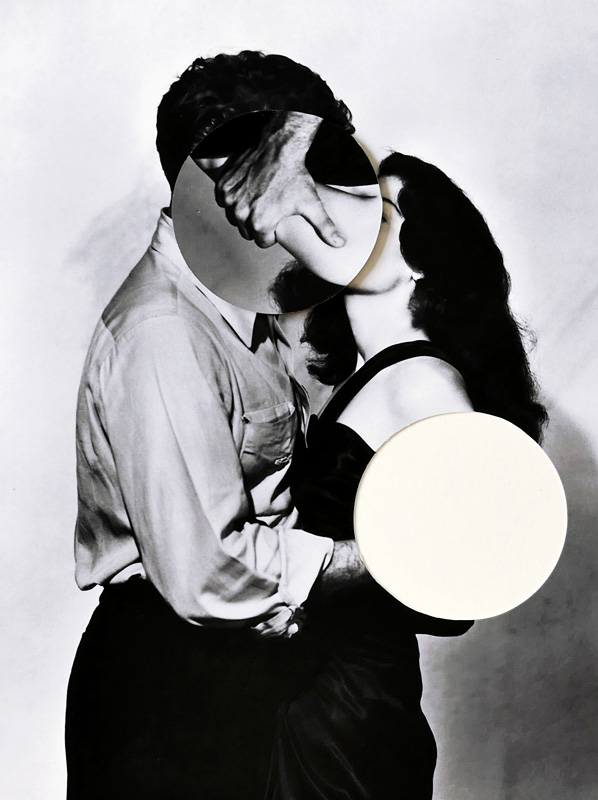
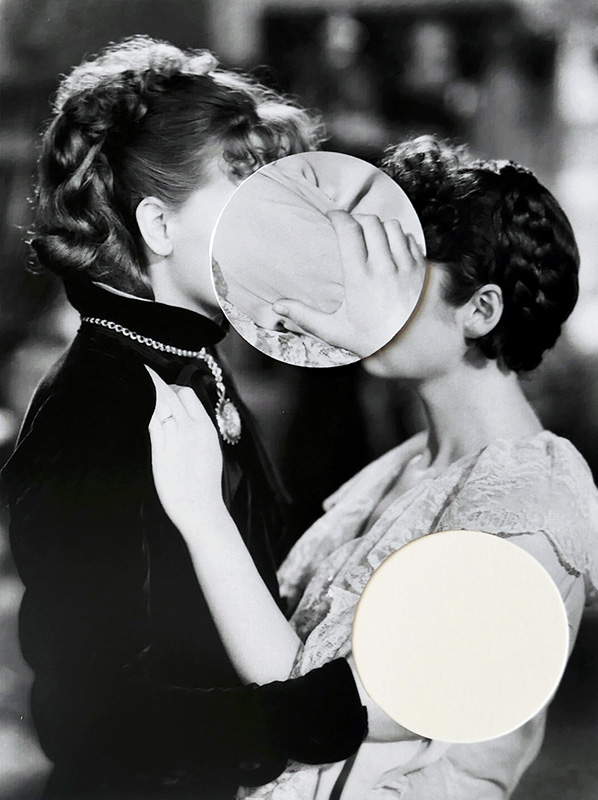
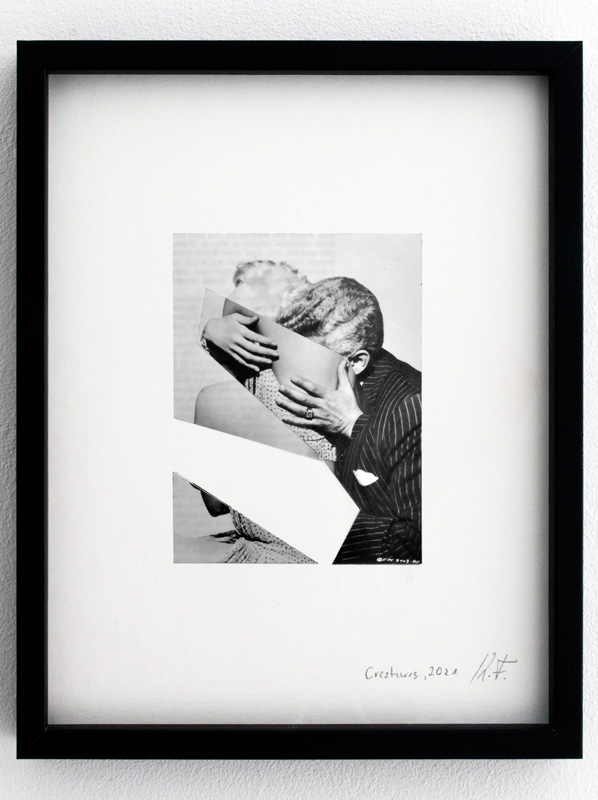
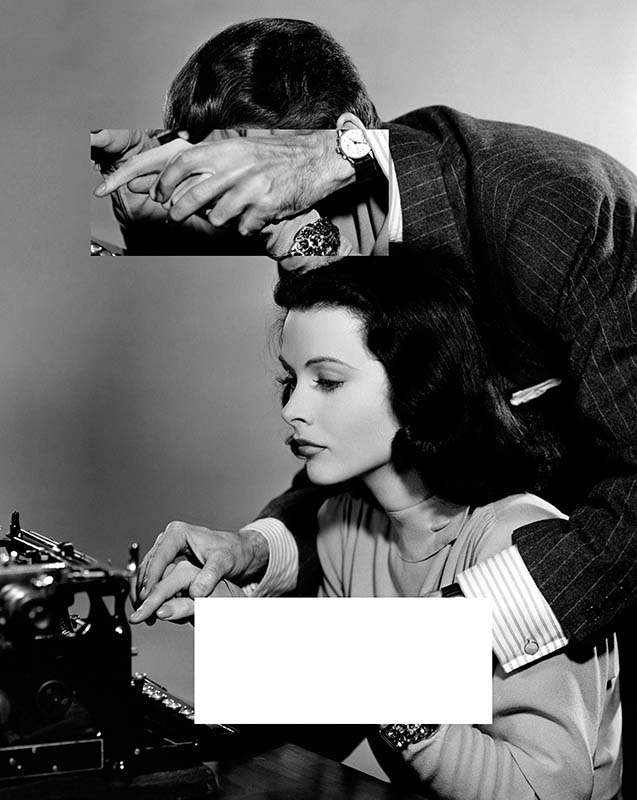
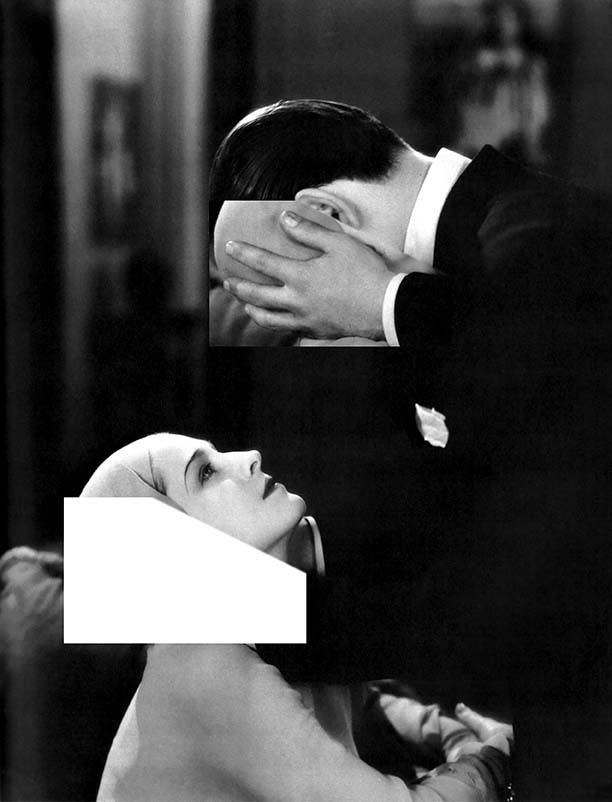
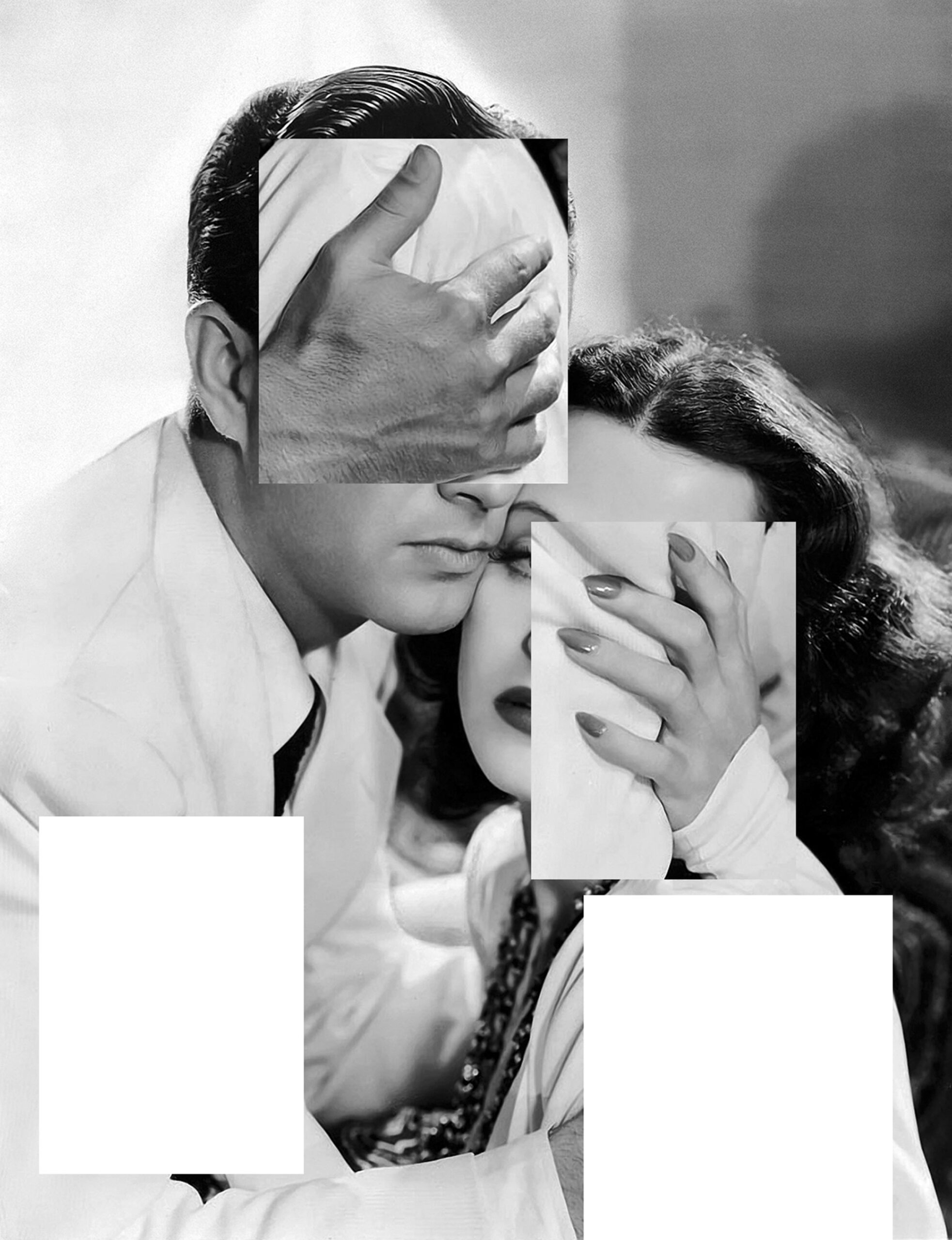
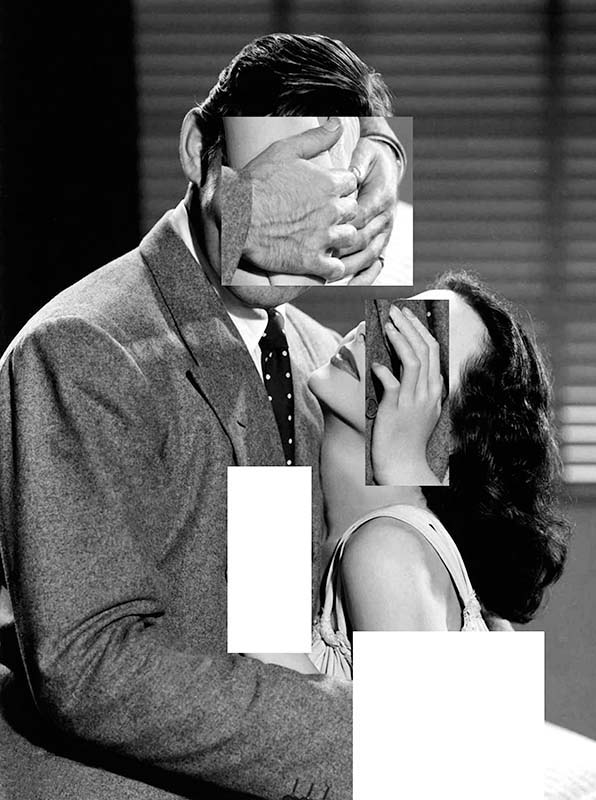
“Creatures on its own” (2015–ongoing) is a series of collages where I reconfigure cinematic images, with a strong focus on hands, touch, and body language as a non-verbal communicative medium. The works consist of found film imagery and media photographs where I fragment and recombine human bodies into strange hybrid beings that appear simultaneously familiar and alien. Their underlying tension stems from the revelation of hidden power relations that shape human interactions, bodily communication, and the construction of visual identities. The title itself suggests the autonomous beings of the hands—creatures that exist independently of the people or media from which they originated. The works can be read as reflections on identity, perception, and the instability of the body as an image. In this way, the work examines how visual media construct human behavior while simultaneously questioning the stability of those constructions.
Situated within contemporary practices of collage, found footage, and post-photographic image-making, Creatures on its own proposes an ecology of images in which bodies are continuously reshaped by circulation, repetition, and recontextualization. The works inhabit the threshold between individual socialization through visual culture and collective iconography, presence and absence, coherence and fragmentation. They invite viewers to confront the instability of perception and to reconsider the ways identities are assembled within contemporary culture.
(Karin Fisslthaler)